

 David Mantica
You're Solving the Wrong Problem — And It's Costing You Everything
 David Mantica : April 13, 2026
The Single Most Common Leadership Failure Nobody Talks About
It Is Not About Having Better Answers. It Is About Asking Better Questions.
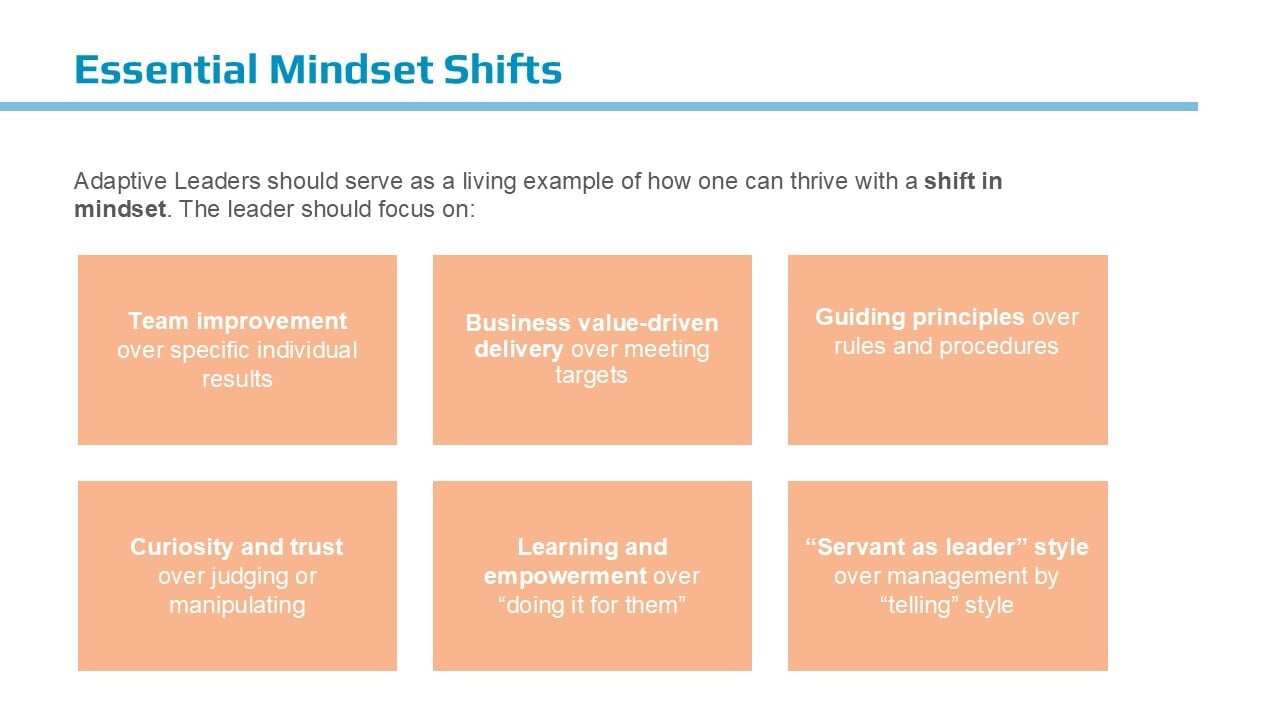
Essential Mindset Shifts — the internal changes that make external leadership possible
Leadership development has a content problem. There are thousands of books on how to be a better leader, and most of them focus on what leaders do — the behaviors, the frameworks, the communication strategies. What they rarely address is the underlying mindset from which those behaviors emerge. Adaptive leadership is different. It starts from the inside out.
The first mindset shift is moving from managing for individual results to leading for collective growth. An adaptive leader's primary value is not in delivering their own outputs. It is in creating the conditions in which the people around them can diagnose problems, make decisions, and develop the capacity to handle whatever comes next. The moment you define your worth primarily by your individual performance, you stop functioning as a leader and start functioning as a high-performing individual contributor who happens to have a title.
The second shift is from meeting targets to delivering business value. Targets are proxies — they measure what someone could define and capture at a moment in time. Business value is the real thing. In changing environments, the gap between hitting a metric and actually creating value for customers can grow very large. Adaptive leaders are always asking: Is what we are working on genuinely creating value? Or are we optimizing a measurement that has drifted from the thing it was originally meant to represent?
Third: guiding principles over rules and procedures. Rules handle scenarios that someone imagined in advance. Principles handle the scenarios no one did. In a volatile, uncertain, complex, and ambiguous world, you cannot write rules fast enough to cover every situation. Teams that operate from clear, internalized principles can self-organize and make sound decisions at the point of work. Teams that wait for rules become helpless the moment the rules run out.
Fourth: curiosity and trust over judgment and manipulation. This is particularly difficult because judgment feels like leadership. It feels decisive and expert. But judgment closes conversations. It tells people what the answer is before they have had the chance to find it themselves. Curiosity keeps conversations open. It creates the psychological safety that allows honest information to surface — which is the only kind of information worth having.
Fifth: learning and empowerment over doing it for them. One of the hardest disciplines in leadership is holding back. When you can see the answer and your team is working toward it, the instinct to just fix it is almost overwhelming. But in doing so, you rob them of the learning, and you rob the organization of the resilience that comes from teams that can solve their own problems without waiting for rescue.
Sixth, and perhaps most underappreciated: servant leadership over command and control. At its most practical, this means a leader's primary job is to ask: What do you need? What barriers can I remove for you? Where are you stuck? The leader drives the ship not by gripping the wheel, but by clearing the path. Each of these shifts is a daily discipline, not a permanent achievement. And the leader who embodies them consistently earns the only thing that matters in adaptive environments: genuine trust.
David Mantica : April 13, 2026
The Single Most Common Leadership Failure Nobody Talks About
David Mantica : April 17, 2026
Why Listening — Real Listening — Is the Adaptive Leader's Most Powerful Tool
David Mantica : April 7, 2026
The Science of Productive Distress and Why Your Career Depends on Embracing It