

You Cannot Learn When You're Comfortable — And That's the Point
The Science of Productive Distress and Why Your Career Depends on Embracing It
2 min read
David Mantica
Apr 17, 2026 5:11:25 PM
Why Listening — Real Listening — Is the Adaptive Leader's Most Powerful Tool

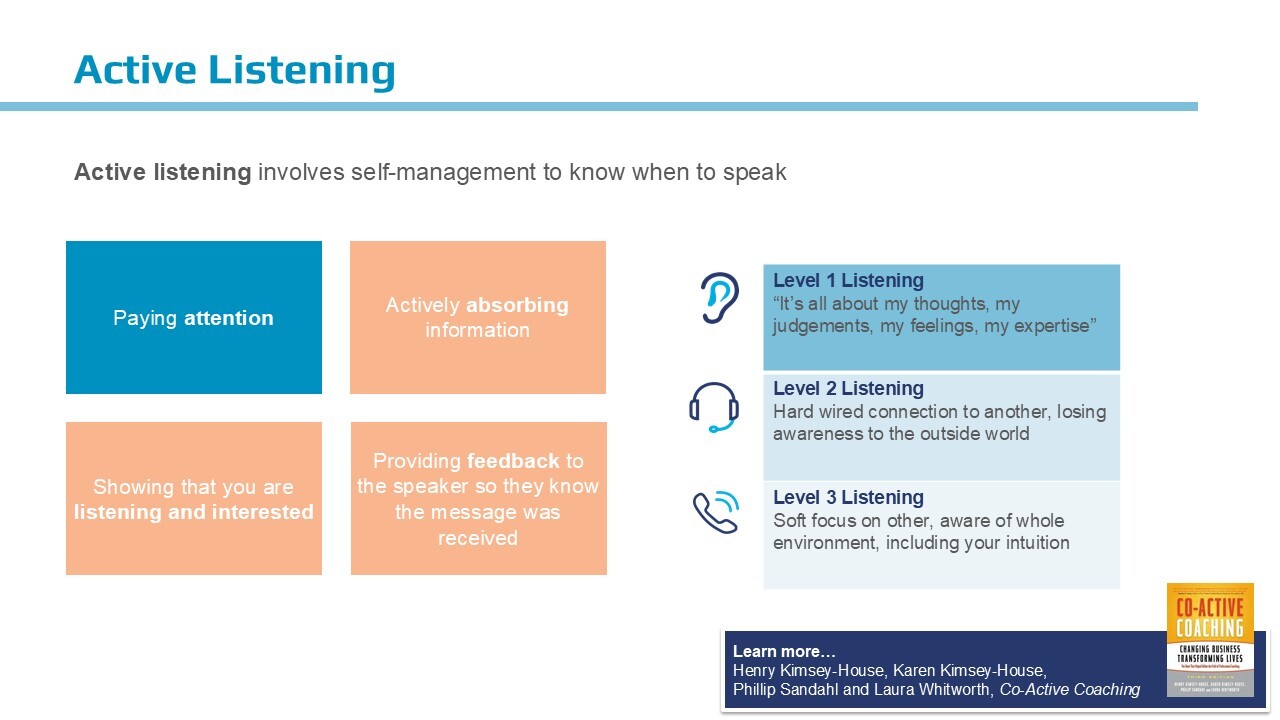
Active Listening: the three levels — and why most of us never get past Level 1
I want to tell you about an interview I did in 1995. I walked out of it knowing I wanted to work for that person. Not because he was intimidating or because he sold me on a compelling vision. Because he listened. Completely. He paraphrased what I said. He asked follow-up questions that demonstrated he had absorbed my previous answer. He made me feel — more than at any other point in my professional life up to that moment — that what I was saying actually mattered. Thirty-one years later, I still remember it with clarity. That is the power of real listening.
In a world that rewards the loudest voices and the most confident-sounding opinions, active listening has become a genuinely rare skill. And for adaptive leaders, it may be the single most strategically important one.
Here is why. Every adaptive challenge is, at its core, a diagnosis problem. You cannot figure out what the problem really is without accessing honest information from the people who are closest to it. And people will not give you honest information unless they feel safe. And they will not feel safe unless they believe — genuinely believe — that you are actually listening to them.
There are three distinct levels of listening. Most of us operate at Level 1 most of the time: our attention is largely on our own thoughts, our own judgments, and what we are going to say next. We are physically present in the conversation but not truly in it. Level 2 means genuinely connecting with the other person — you are focused on them, tracking their meaning, losing some awareness of the surrounding context. Level 3 is the most powerful and the rarest: a soft, open attentiveness that takes in not just the other person's words but their energy, what they are not saying, and the broader environment in which the conversation is taking place.
Most meetings in most organizations never progress past Level 1. Everyone is waiting their turn to speak. The result is that the information that most needs to surface — the uncomfortable observation, the dissenting view, the thing that everyone is thinking but no one is saying — never makes it into the conversation.
Silence is the underused complement to listening. In negotiation, extended silence can shift the entire outcome of a deal. In a requirements-gathering session, giving someone thirty seconds of quiet space to think before answering yields a fundamentally different and richer response than the one produced under pressure. We are so uncomfortable with silence in professional settings that we fill it reflexively, and in doing so we fill the space where real thinking would have happened.
The questions an adaptive leader asks are equally important. Open-ended questions — Why did you approach it that way? What would you do differently? How else might this be solved? — do something closed questions cannot: they signal that you do not already have the answer. They create genuine space for the other person's judgment and experience to enter. They build trust. And they produce information that a yes-or-no question never could.
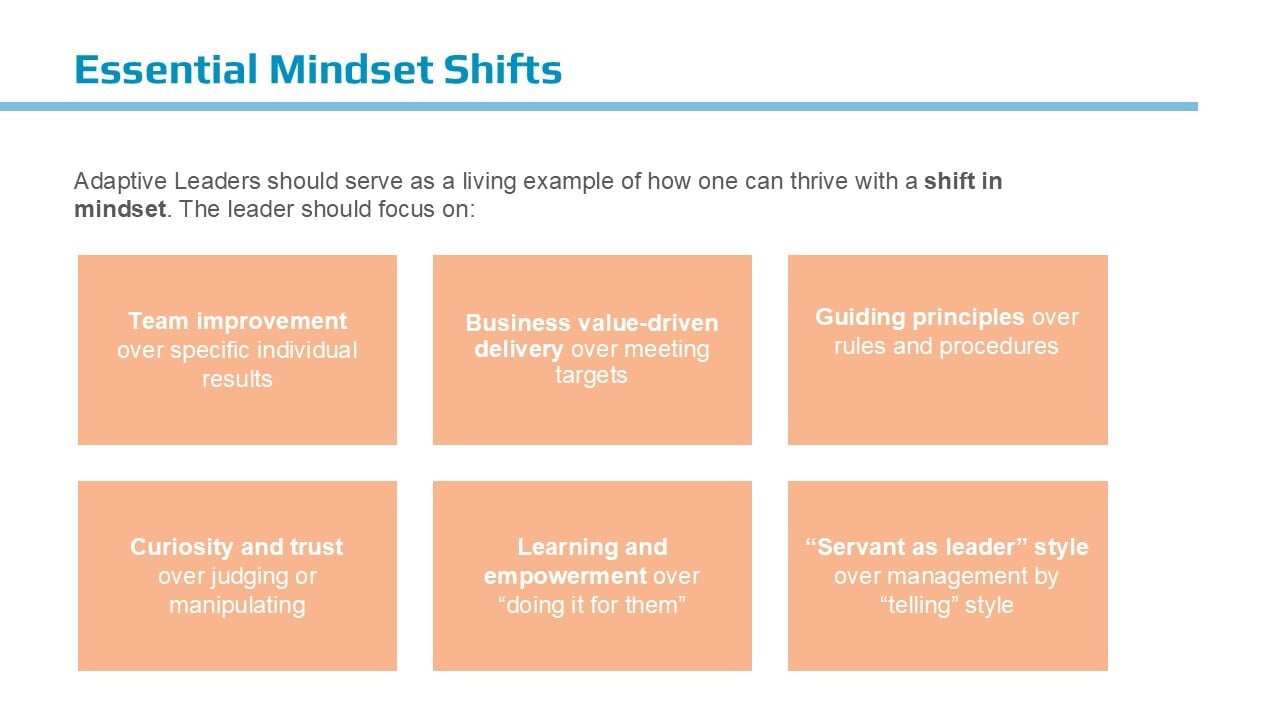
Pair this with radical candor — the discipline of being direct, honest, and respectful at the same time — and you have the complete communication foundation of genuine adaptive leadership. Not the performance of leadership. The real thing. The work of adaptive leadership is ultimately relational. It is about creating environments where people can face hard realities, learn through productive discomfort, and develop the resilience to thrive in a world that will not stop changing. That work begins, every single time, with someone making the decision to actually listen.
Interested in our courses, webinars, or corporate training solutions?
Send us a message and a member of our team will get back to you shortly.
The Science of Productive Distress and Why Your Career Depends on Embracing It
The Single Most Common Leadership Failure Nobody Talks About
The tool that's quietly changing how we think about AI applications