

 David Mantica
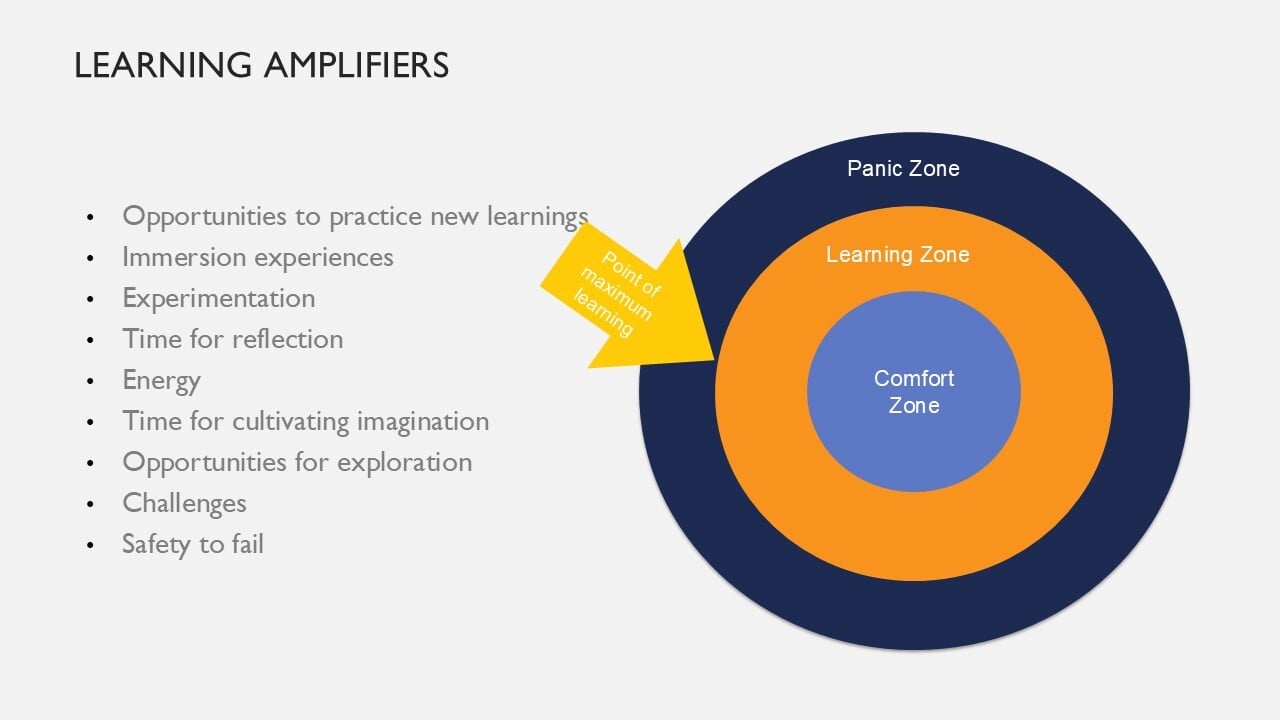
You Cannot Learn When You're Comfortable — And That's the Point
 David Mantica : April 7, 2026
The Science of Productive Distress and Why Your Career Depends on Embracing It
The Single Most Common Leadership Failure Nobody Talks About
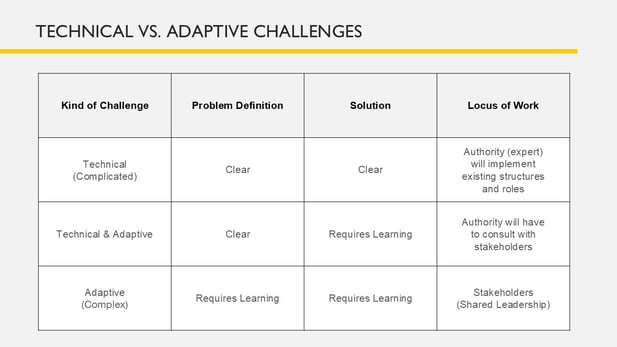
Technical vs. Adaptive Challenges — the foundational distinction every leader needs to master
There is a failure mode that derails more careers, stalls more change initiatives, and frustrates more intelligent people than almost any other workplace problem. It does not show up on performance reviews. It rarely makes it into post-mortems. And yet it is hiding in plain sight inside almost every struggling team and stuck organization. The failure is this: applying a technical solution to an adaptive challenge.
Most of us are trained to solve problems efficiently. We learn frameworks, build processes, install new software, hire consultants, and run training programs. When something is broken, we identify the fix and execute. This works beautifully for technical problems — situations where the problem is clear, the solution is knowable, and the right expert can simply go do the work. Cut the lawn. Ship the feature. Fix the budget variance.
But a large and growing category of workplace challenges does not work this way. In adaptive challenges, you do not know what the problem fully is. You may not even know what the solution looks like. And here is the part that trips people up: no authority figure can hand you the answer, because the answer does not yet exist. It has to be learned into existence.
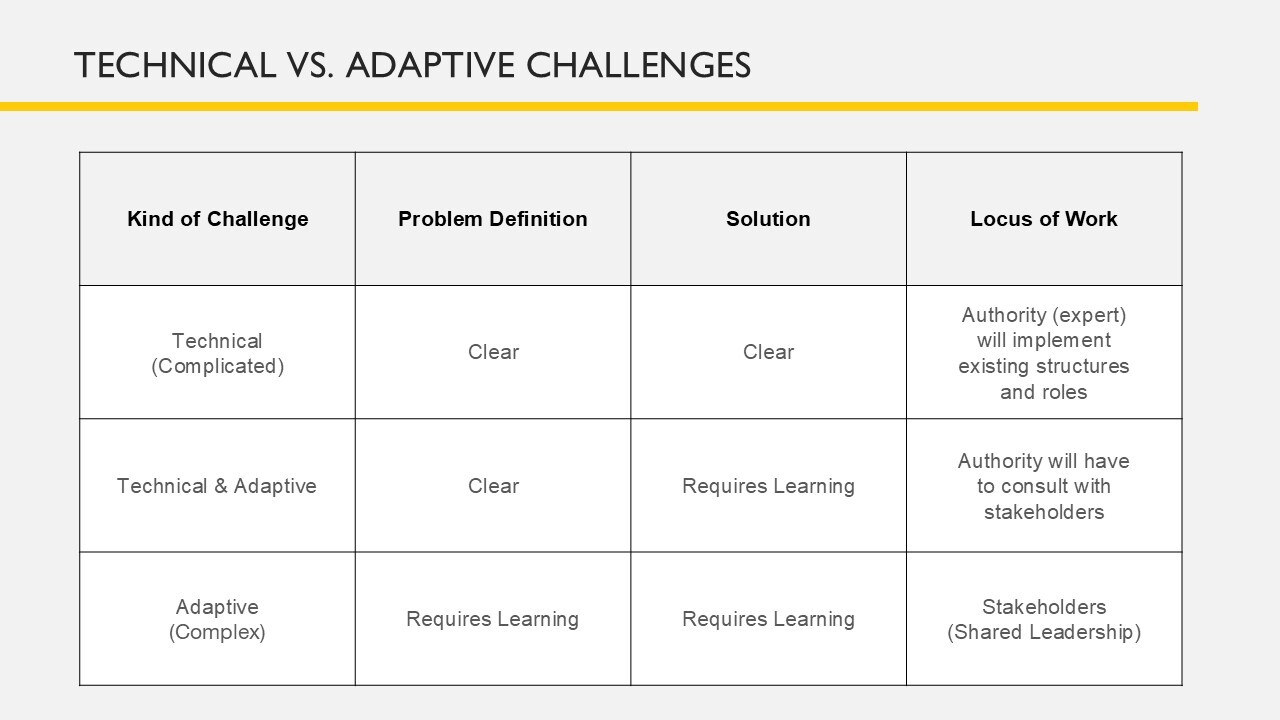
Ron Heifetz and Marty Linsky, who developed adaptive leadership at Harvard's Kennedy School, identified three levels of challenge. The first is purely technical — clear problem, clear solution, clear authority to act. The second is a hybrid where the problem is defined but the solution requires genuine learning and consultation across stakeholders. The third — fully adaptive — is where both the problem definition and the solution must be discovered through learning. This is where organizations most often get into trouble, because the instinct is to treat a Level 3 challenge like a Level 1 one.
Think about how many meetings you have sat in where a recurring problem gets the same recycled fix, then resurfaces six months later. Think about change programs with flawless communication plans that still fail because the underlying beliefs of the organization never shifted. Think about the manager who keeps telling the team what to do and wondering why nothing sticks. These are adaptive challenges being treated as technical ones.
The results are predictable: the problem keeps coming back, people get frustrated and emotional without being able to articulate why, reason and logic stop producing results, and progress feels impossible no matter how smart the people in the room are. If three or more of these flags are present — recurring issues, emotional reactions, avoidance behaviors, competing values, or a sense that moving forward is personally risky — you are likely dealing with an adaptive challenge.
The fix is not a better process or a sharper consultant. It is a different kind of diagnosis. Before you reach for a solution, ask honestly: do I actually understand the problem? The first and most powerful skill an adaptive leader can develop is learning to tell the difference. Everything else builds from there.
David Mantica : April 7, 2026
The Science of Productive Distress and Why Your Career Depends on Embracing It
David Mantica : April 17, 2026
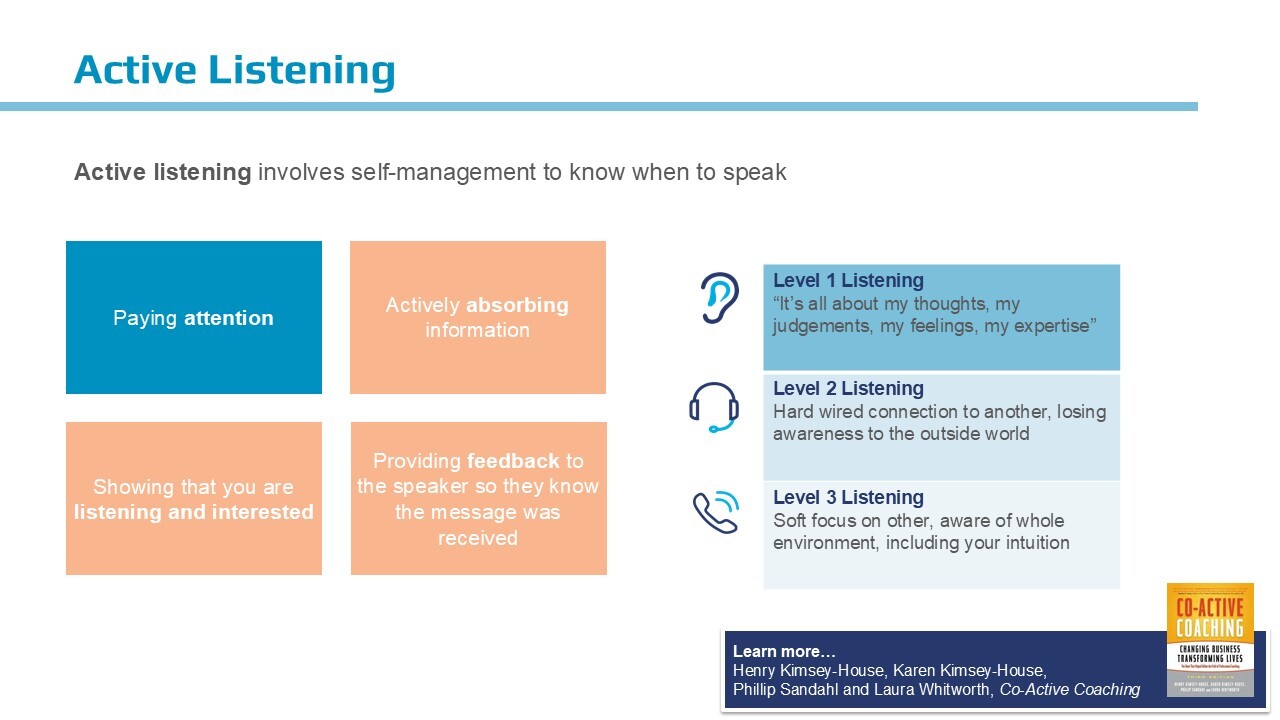
Why Listening — Real Listening — Is the Adaptive Leader's Most Powerful Tool

David Mantica : May 16, 2026
AI Is Adaptive Work Disguised as a Technical Project And This Is Why Your Rollout Is Stalling