

2 min read

Demystifying RAG: Retrieval-Augmented Generation

Demystifying RAG: Retrieval-Augmented Generation
3:19

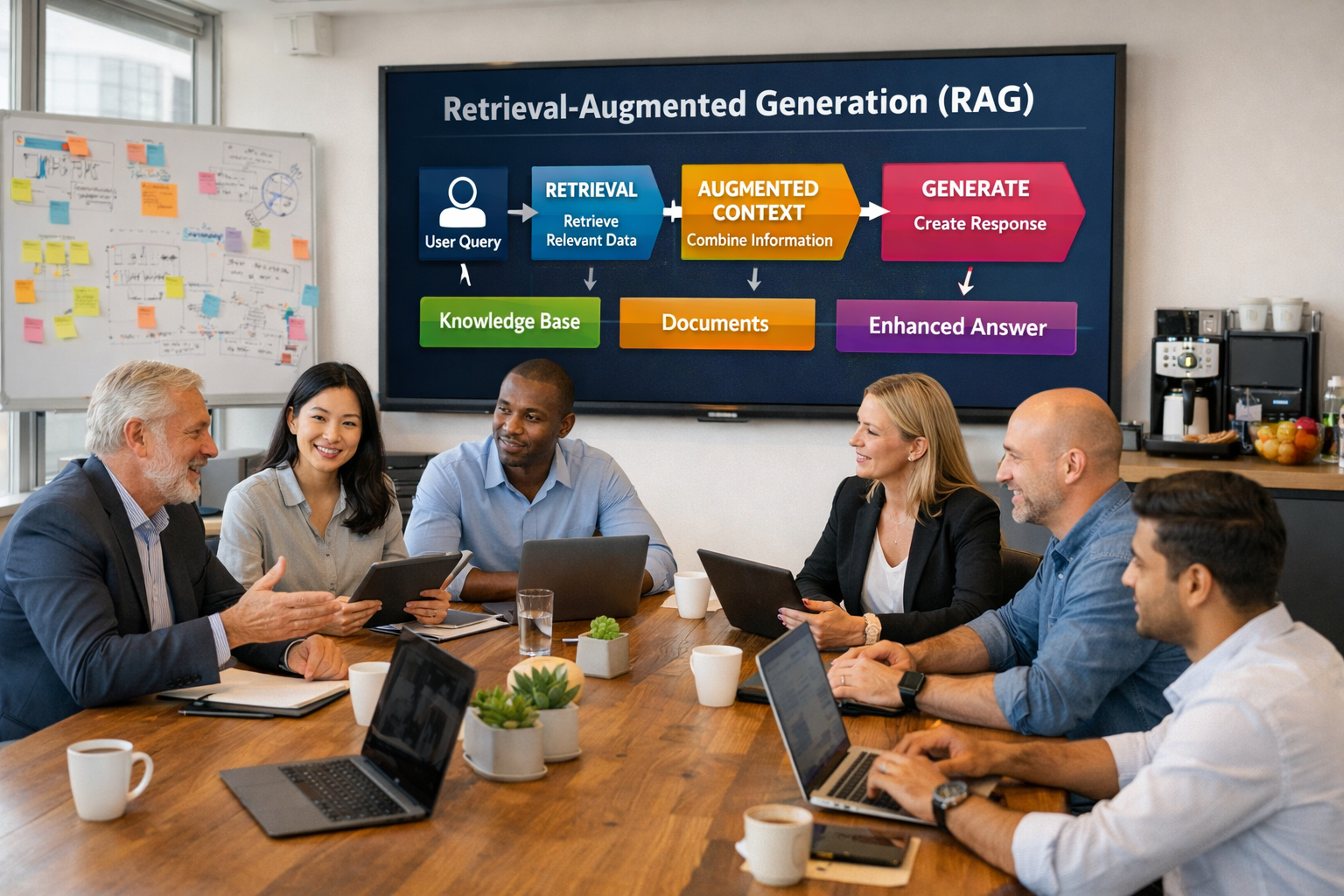
If you have spent any time evaluating AI tools for your business, you have probably run into the term RAG. It sounds academic. It sounds like something your data science team should worry about and not you. But here is the reality: Retrieval-Augmented Generation is one of the most important concepts shaping how organizations actually get value out of AI today. At its simplest, RAG is a technique that lets an AI model pull in real, relevant information from your own data sources before it generates a response. Instead of relying purely on what the model learned during training, which could be months or years out of date, RAG grounds the AI in your actual documents, databases, knowledge bases, and internal systems. The result is answers that are specific, current, and rooted in your organization's reality rather than generic internet knowledge.

Why does this matter to you as a leader? Because the number one complaint people have about AI in a business context is that it makes things up. It sounds confident. It sounds polished. And sometimes it is flat out wrong. That problem has a name: hallucination. RAG is the most practical solution the industry has found to reduce it. When an AI model retrieves verified source material before generating its answer, the output is anchored to real data. Your policies. Your product specs. Your client history. Your compliance documentation. This is what turns a general purpose chatbot into something your team can actually trust with real work. Without RAG, AI is an impressive parlor trick. With it, AI becomes a legitimate operational tool.

The catch is that RAG is not a magic switch you flip on. It requires thoughtful implementation. You need clean, well-organized data. You need an embedding strategy that makes your content searchable in ways the AI model can use. You need a retrieval layer that knows how to find the right information at the right time without pulling in noise. And you need to think carefully about what data you expose, how you secure it, and how you keep it current. Organizations that skip these steps end up with RAG implementations that feel broken. The AI retrieves the wrong documents, surfaces outdated information, or pulls from sources that contradict each other. The difference between a RAG deployment that builds trust and one that erodes it comes down to how seriously you treat the data foundation underneath it.

This is exactly why we address RAG across multiple layers of our AI curriculum at SoftEd. Whether you are a manager trying to understand what your technical team is proposing, an analyst looking to build smarter internal knowledge tools, or a leader evaluating enterprise AI platforms, understanding RAG is no longer optional. It shows up in our foundational courses like AI Essentials and Generative AI Foundations, and it plays a central role in more advanced work around AI Integration and Workflow Development. The organizations getting real returns from AI right now are not the ones with the biggest budgets. They are the ones that understand how the technology actually works and invest in making sure their people do too. RAG is one of those concepts that separates informed adoption from expensive experimentation.

The Quiet Promotion: Why Agentic AI Moves Your Role Upstream

The Quiet Promotion: Why Agentic AI Moves Your Role Upstream

The most frequent question I hear when I run sessions on agentic AI is some version of the same thing. "What does my role look like when this is...

Read More
The Rise of the AI-Ready Technical Program Manager

The Rise of the AI-Ready Technical Program Manager

The modern enterprise runs on complex systems, cross-functional initiatives, and constant change. In that landscape, the Technical Program Manager...

Read More
Reframing the Monster: How to Turn Conflict into Collaboration

Reframing the Monster: How to Turn Conflict into Collaboration

Conflict is often described as a monster in the workplace — unpredictable, intimidating, and best avoided. But as communication expert Tommy Re...

Read More